Evaluating Cute Swile for Your Design Projects
In the realm of digital typography, selecting the right typeface is a critical decision that influences readability, brand perception, and user engagement. Cute Swile has emerged as a notable option for designers seeking a specific aesthetic: one that is rounded, cheerful, and distinctly friendly. As a fresh and cheerful rounded font, it is engineered to evoke a sense of happiness and lightness, making it a frequent candidate for children-focused designs. However, before integrating this typeface into a project, it is essential to evaluate its characteristics, limitations, and suitability against your specific design goals.
Understanding the Aesthetic of Cute Swile
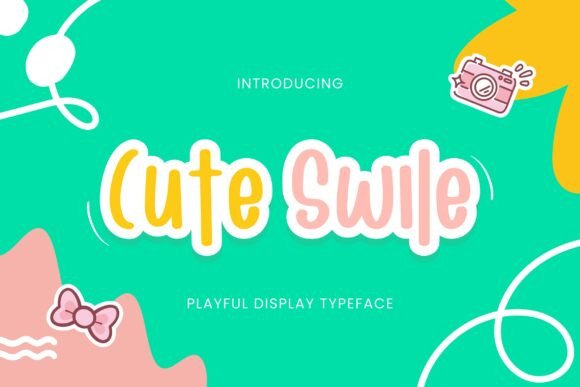
Cute Swile is defined by its smooth curves and playful proportions. Unlike standard sans-serif fonts that prioritize strict geometric uniformity, this typeface embraces a softer, more organic feel. The letterforms are designed with a friendly personality, utilizing rounded terminals and open counters to create a visual experience that feels modern yet approachable. The primary intent behind its design is to communicate positive energy while maintaining a clean structure that supports legibility.
When analyzing the font's construction, one notices a deliberate avoidance of sharp angles. This softening of edges is a common technique in typography intended for younger audiences or brands aiming to appear non-threatening and welcoming. The result is a typeface that looks bright and cute without sacrificing the fundamental requirements of a readable text font. For projects requiring a balance between whimsy and clarity, Cute Swile offers a distinct visual language that sets it apart from more rigid or traditional typefaces.
Key Benefits and Use Cases
The primary advantage of using Cute Swile lies in its ability to instantly establish a tone. In design psychology, rounded shapes are often associated with safety, comfort, and playfulness. Consequently, this font is particularly effective in scenarios where the goal is to reduce cognitive load and create an inviting atmosphere. Below are the situations where this typeface demonstrates strong performance:
- Children’s Books and Reading Materials: Early readers benefit from clear, distinct letterforms that do not look intimidating. The playful nature of Cute Swile can make reading materials feel like an adventure rather than a chore, encouraging engagement among young audiences.
- Kids' Product Branding and Packaging: For products targeting children, such as toys, snacks, or clothing, packaging needs to stand out on a shelf while communicating fun. This font provides the necessary "pop" and friendliness to align with product expectations.
- Educational Designs: Classroom posters, worksheets, and educational apps often require a font that is easy to read but engaging. Cute Swile strikes a balance that keeps students interested without causing visual fatigue.
- Social Media and Creative Content: In the fast-paced environment of social media, headlines need to capture attention immediately. The cheerful vibe of this typeface makes it suitable for captions, story overlays, and titles related to family, parenting, or youth culture.
Tradeoffs and Considerations
While Cute Swile excels in specific niches, it is not a universal solution for all design challenges. Evaluating its tradeoffs is crucial for making an informed decision. The most significant consideration is the context of use. Because the font leans heavily into a "cute" and "playful" aesthetic, it may clash with content that requires authority, seriousness, or formality.
One potential limitation is the perceived maturity of the brand. If a company aims to position itself as a corporate leader, a financial institution, or a luxury service provider, the rounded and bubbly nature of this typeface might undermine those messages. It can inadvertently signal informality where professionalism is expected. Additionally, while the font is designed to be easy to read, extremely long blocks of body text in any display-oriented rounded font can sometimes lead to reduced reading speed compared to neutral sans-serifs. Therefore, it is generally best utilized for headlines, titles, and short paragraphs rather than dense informational text.
Legibility and Accessibility
Another factor to weigh is accessibility. While Cute Swile is generally clean, the stylized nature of some rounded fonts can occasionally obscure the distinction between similar characters (such as 'a', 'o', and 'e') for users with visual impairments or dyslexia. Designers should test the font at various sizes and ensure sufficient contrast when pairing it with backgrounds. If the primary audience includes individuals with specific reading difficulties, a more utilitarian typeface might be a safer choice for body copy, reserving Cute Swile strictly for decorative headers.
When to Consider Alternatives
There are several scenarios where exploring alternatives to Cute Swile would be a prudent strategic move. If your project involves legal documents, medical information, or academic research, a neutral, high-legibility serif or sans-serif font is preferable. In these contexts, the "friendly personality" of the font could distract from the gravity of the content.
Furthermore, if you are designing for a global audience, consider cultural interpretations of "cuteness." While the aesthetic is widely accepted in many Western markets, other regions may have different preferences regarding typography and visual hierarchy. If your brand identity relies on minimalism or stark modernism, the curvilinear forms of this font might introduce too much visual noise. In such cases, a geometric sans-serif with sharper edges might better align with a sleek, futuristic, or industrial brand identity.
Practical Decision-Making Insights
To determine if Cute Swile aligns with your goals, apply a simple evaluation framework. First, define the emotional response you wish to elicit from your audience. If the keywords are "joy," "fun," "safe," or "approachable," this font is a strong contender. If the keywords are "trust," "authority," "efficiency," or "luxury," look elsewhere.
Second, consider the medium and scale. Test how the font renders on mobile screens versus large format prints. Rounded fonts often hold up well in larger sizes but can lose definition if used too small. Finally, pair the font with complementary elements. Cute Swile works best when balanced with ample white space and vibrant, yet harmonious, color palettes. Overcrowding the design with busy graphics can negate the clean and easy-to-read qualities of the typeface.
In conclusion, Cute Swile is a specialized tool within the designer's toolkit. It is not merely a font but a vehicle for conveying a specific mood—one of brightness and positivity. By understanding its strengths in children's content and playful branding, while remaining mindful of its limitations in formal contexts, you can make a calculated decision on whether it serves your project's unique needs. Whether for a children's book, a product package, or a creative headline, the key is ensuring the typography supports the message rather than overshadowing it.