Classic Handmade: A Retro Display Font Evaluation
Typography plays a pivotal role in visual communication, often dictating the tone and readability of a design before a single word is read. Classic Handmade is a display font designed to capture the nostalgic aesthetic of mid-century comics, cartoons, and hand-lettered signage. As designers seek to evoke specific eras or moods, understanding the functional capabilities and limitations of such typefaces is essential for making informed decisions. This evaluation explores what Classic Handmade offers, where it excels, and when alternative solutions might be more appropriate for your projects.
Understanding the Design Philosophy
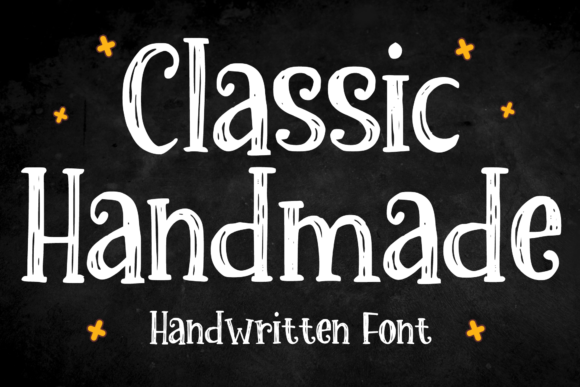
Classic Handmade is categorized as a retro display font, meaning it is intended primarily for headlines, titles, and short bursts of text rather than extended body copy. Its character set draws inspiration from the playful energy found in vintage illustrations. The letterforms typically feature irregular baselines, varying stroke weights, and a slightly imperfect, hand-drawn quality that mimics the texture of ink on paper or marker on cardboard.
The design intent behind Classic Handmade is to bridge the gap between digital precision and analog charm. Unlike geometric sans-serifs that prioritize uniformity, this font embraces eccentricity. Each glyph is crafted to feel organic, often incorporating subtle distortions that suggest movement and spontaneity. For designers looking to replicate the look of classic comic book covers or 1950s advertisements without manually lettering every project, this typeface provides a structured yet flexible foundation.
Key Use Cases and Strengths
Evaluating a font requires looking at its performance in specific contexts. Classic Handmade demonstrates particular strength in scenarios where visual impact and thematic consistency are prioritized over information density.
- Sticker and Label Design: The bold, outlined nature of many characters in this style makes them highly legible even at small scales, provided the background contrast is sufficient. It works well for product packaging that aims for a "craft" or "artisanal" vibe.
- Apparel and Merchandise: On t-shirts and tote bags, the font's distinct personality stands out against fabric textures. It is particularly effective for band merchandise, event flyers, or lifestyle brands targeting a retro demographic.
- Editorial Headers: Magazine covers and book titles benefit from the font's ability to grab attention. It serves as an excellent anchor for stories related to nostalgia, pop culture history, or creative hobbies.
- Comic and Cartoon Illustrations: Since the font is inspired by this medium, it integrates seamlessly with line art and halftone patterns, maintaining stylistic coherence throughout the piece.
The primary benefit of using Classic Handmade is efficiency. Achieving a high-quality hand-lettered look manually is time-consuming. This font allows designers to maintain a consistent aesthetic across multiple assets while significantly reducing production time. Furthermore, the built-in variations within the character set can add a layer of depth that standard system fonts cannot achieve.
Tradeoffs and Limitations
While Classic Handmade offers distinct visual appeal, it comes with inherent tradeoffs that must be considered during the selection process. The most significant limitation is readability at small sizes. Because display fonts often feature tight kerning, intricate details, and irregular shapes, they can become illegible when scaled down below 14 points or used for long paragraphs.
Another consideration is versatility. The strong stylistic voice of Classic Handmade means it may clash with modern, minimalist design systems. If a brand identity relies on clean lines and neutral tones, introducing a highly stylized retro font could create visual dissonance. Additionally, the "handmade" aesthetic implies informality; using this font for legal documents, financial reports, or serious corporate communications would likely undermine the message's authority.
Designers should also be aware of potential accessibility issues. Users with dyslexia or visual impairments may struggle with fonts that have irregular spacing or decorative elements. In contexts where inclusivity is a priority, a more neutral sans-serif might be a safer choice for body text, reserving Classic Handmade strictly for decorative headers.
Situations for Alternatives
Determining whether Classic Handmade aligns with your goals involves recognizing when other options are superior. You should consider alternatives if:
- You require extensive body text: If the project involves reading large blocks of text, a serif or humanist sans-serif will provide better eye tracking and reduced fatigue.
- The context demands strict neutrality: For technical manuals, medical interfaces, or government forms, the playful nature of this font is inappropriate.
- Brand guidelines enforce minimalism: If the existing brand identity is sleek and futuristic, the vintage aesthetic of Classic Handmade may dilute the brand's core message.
- Multilingual support is critical: Many display fonts have limited character sets. If your project requires extensive language support (e.g., accented characters, non-Latin scripts), verify the font's coverage before committing.
In these scenarios, pairing a cleaner, more utilitarian font with a different accent typeface—or simply choosing a more versatile family—will yield better results.
Practical Decision-Making Insights
To decide if Classic Handmade is the right tool for your next project, apply a few practical tests. First, mock up your headline alongside your chosen body font. Does the contrast work? Often, a quirky display font pairs best with a simple, unobtrusive companion typeface to prevent visual competition.
Second, test the font at various sizes. Print a sample or view it on a mobile screen to ensure the details remain crisp and the letters do not merge together. Third, consider the longevity of the trend. While retro styles cycle frequently, ensure the specific iteration of "vintage" represented by this font aligns with your long-term branding strategy rather than just a passing fad.
Finally, evaluate the license terms. Ensure you have the necessary rights for your intended use, whether that be web embedding, print runs, or commercial merchandise. Understanding the scope of the license is as important as evaluating the visual design.
Conclusion
Classic Handmade serves as a powerful asset for designers aiming to inject nostalgia and personality into their work. Its strength lies in its ability to quickly establish a retro, comic-inspired mood for headlines and graphic elements. However, its utility is bounded by its lack of suitability for body text and formal contexts. By carefully weighing these strengths against the specific requirements of your project, you can determine whether this font enhances your design or distracts from it. When used strategically, it remains an effective tool for creating memorable, visually engaging content.