Ghost Sting: Unleashing Raw Terror in Your Horror Designs
In the competitive landscape of visual storytelling, a title is often the first weapon deployed to capture an audience's attention. For creators working within the horror, thriller, and dark fantasy genres, standard typography often falls short. Clean, geometric fonts lack the visceral punch required to convey dread, chaos, or survival. This is where Ghost Sting enters the creative process. More than just a typeface, Ghost Sting is a visual narrative tool designed to inject immediate tension and raw energy into your projects. It bridges the gap between simple text and a full-blown atmospheric experience, allowing designers to communicate fear before a single image is viewed.
The Challenge of Conveying Fear Through Typography
Designers and content creators in the horror niche face a unique set of challenges. The primary goal is not merely to inform but to evoke a physiological response—a spike in adrenaline, a sense of unease, or a feeling of impending doom. Achieving this with traditional fonts is difficult because most typefaces are engineered for legibility and neutrality. When a movie poster or a game cover relies on a clean sans-serif font, it can inadvertently soften the impact of a terrifying concept.
The specific need here is for a typeface that feels organic yet dangerous. It must look as though it was scratched onto a wall in a panic, painted by a trembling hand, or carved by a creature's claw. Without the right visual texture, even the most gruesome imagery can feel sterile. Creators often struggle to find resources that balance readability with aggressive aesthetics. They need a solution that does not require hours of manual distressing or complex photo editing to achieve a gritty, cinematic look. This is the core problem that Ghost Sting addresses directly.
Understanding the Power of Ghost Sting
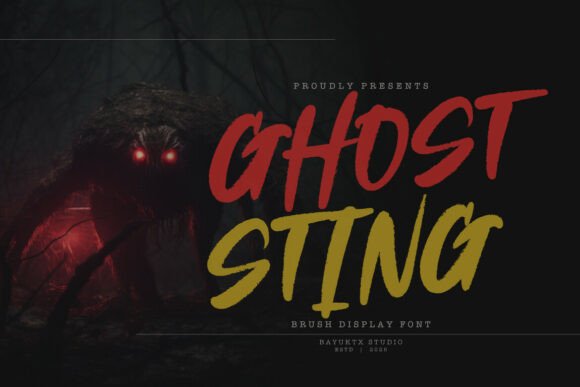
Ghost Sting is a display font crafted specifically to unleash a fierce fusion of wild brush energy and sinister visual drama. Unlike static digital fonts, Ghost Sting mimics the chaotic flow of hand-painted textures. Its design philosophy is rooted in the instinctive movements of fear and aggression. Every letterform hits with force, characterized by sharp, jagged edges and an untamed structure that refuses to sit quietly on the page.
The font captures the raw terror of horror atmospheres through its aggressive strokes. It mirrors the frantic feel of scratched walls, creature marks, and chaotic survival scenes. By incorporating rough, hand-painted textures into the very DNA of the characters, Ghost Sting ensures that every composition carries a dangerous, cinematic presence. It transforms simple text into scenes filled with fear, suspense, and dark adrenaline. Whether you are designing a poster for a slasher film or creating a thumbnail for a spooky stream, this typeface instantly injects the necessary chaos and raw artistic aggression.
Why Texture Matters in Horror Design
The effectiveness of Ghost Sting lies in its texture. In visual psychology, smooth surfaces often imply safety and order, while rough, irregular surfaces suggest danger and the unknown. Ghost Sting leverages this psychological trigger. The gritty brush details enhance the intensity of every composition, making titles appear as if they are emerging from a nightmare. This is particularly effective when the design aims to evoke the essence of creepy forests, glowing-eyed monsters, or shadowy nightmare creatures. The font itself becomes part of the monster, adding a layer of depth that flat colors cannot achieve.
Practical Applications and Real-World Outcomes
The versatility of Ghost Sting allows it to serve various roles across different media, provided the context aligns with its intense aesthetic. Here is how different users can leverage this font to meet their specific goals:
- Horror Thriller Movie Titles: For filmmakers and graphic designers, the opening credits or main poster title sets the tone for the entire production. Using Ghost Sting ensures the audience knows immediately that they are entering a world of shock and tension. The font's ability to stand out at large scales makes it perfect for billboards and cinema posters.
- Halloween Posters and Spooky Event Flyers: Event organizers need to cut through the noise of seasonal clutter. A flyer using Ghost Sting grabs attention instantly. The chaotic flow suggests a fun but frightening atmosphere, ideal for haunted houses, escape rooms, or costume parties.
- Dark Fantasy and Monster Concepts: Concept artists and book illustrators often need text that complements their artwork without overpowering it. Ghost Sting works exceptionally well as an accent or a chapter header in dark fantasy novels, reinforcing the themes of survival and ancient evils.
- Game Titles and Streaming Thumbnails: In the digital realm, visibility is key. Game developers and YouTubers use thumbnails to drive clicks. A thumbnail featuring a scary image paired with the bold, jagged letters of Ghost Sting creates a high-contrast hook that demands interaction. It signals to the viewer that the content inside is intense and action-packed.
- Esports Graphics and Dramatic Illustration Text: Even outside traditional horror, the aggressive nature of this font suits competitive gaming environments. Esports teams looking to project dominance and intimidation can use Ghost Sting for team logos, victory screens, or promotional banners.
Strategies for Implementation
While Ghost Sting is powerful, it requires thoughtful implementation to maximize its impact. Because the font is inherently loud and textured, it should generally be reserved for headlines, titles, and short phrases rather than body copy. Overuse can lead to visual fatigue and reduce readability.
Color and Contrast: To fully utilize the rough, hand-painted textures, pair Ghost Sting with high-contrast color palettes. Deep blacks, blood reds, and neon greens work beautifully against the font's jagged edges. Consider using drop shadows or outer glows to make the letters pop off the background, enhancing the "glowing-eyed monster" vibe.
Scale and Composition: Since the font is designed for impact, do not shy away from using it at a large scale. On a poster, let the text dominate the visual hierarchy. If used in digital graphics, ensure there is enough negative space around the letters so the chaotic details do not get lost. The font thrives when given room to breathe and assert its presence.
Audience Alignment: Different audiences react differently to visual cues. For a family-friendly Halloween event, you might pair Ghost Sting with playful imagery to soften the blow slightly. However, for a mature horror film or a zombie survival game, lean into the font's darkest aspects. Let the jagged edges and aggressive strokes tell the story of survival and terror without holding back.
Tailoring the Experience for Your Project
Every creator approaches typography differently based on their specific needs. Some may use Ghost Sting as the central focal point of their design, letting the text carry the emotional weight of the piece. Others might use it sparingly, perhaps just for a subtitle or a warning label, to add a subtle layer of unease to an otherwise clean layout. Both approaches are valid, but the key is intentionality.
If your goal is to create a sense of immediate shock, place the font in the center of the frame with minimal distraction. If your goal is to build a lingering sense of dread, integrate the font into a larger scene where it looks like part of the environment—scratched into a wall or painted on a door. The flexibility of Ghost Sting allows for these varied interpretations, making it a robust tool in any designer's arsenal.
Ultimately, the success of your design depends on how well the typography supports the narrative. Ghost Sting is not just a collection of letters; it is a vehicle for storytelling. By understanding its strengths and applying them strategically, you can transform simple text into unforgettable experiences that resonate with your audience. Whether you are crafting a spine-chilling teaser, a dramatic book cover, or a high-energy esports graphic, this font provides the raw, untamed energy needed to make your vision stand out in a crowded market.