Evaluating Southine: A Guide to Its Use and Limitations
In the landscape of digital typography, few categories are as visually arresting yet functionally specific as high-contrast display scripts. Southine occupies a distinct niche within this category, offering a dramatic, flowing, and assertive aesthetic that immediately commands attention. For designers, marketers, and content creators seeking a font that balances elegance with aggression, understanding the specific characteristics and practical applications of Southine is essential. This evaluation explores what makes this typeface unique, where it excels, and the tradeoffs involved in its implementation.
Understanding the Visual Identity of Southine
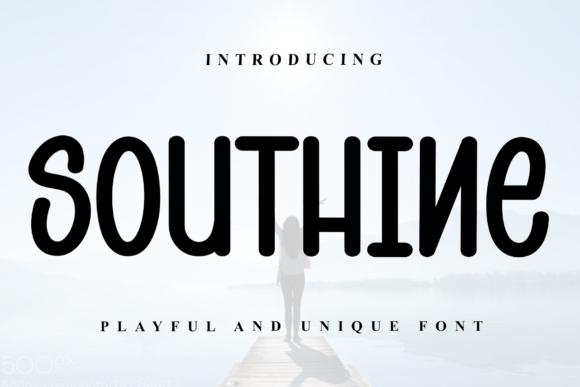
Southine is defined by its extreme contrast between sweeping thin strokes and heavy, bold downstrokes. Unlike standard calligraphic fonts that aim for uniformity, Southine embraces a slightly irregular baseline, lending it a hand-crafted, organic feel while maintaining a structured modern silhouette. The aggressive slant of the characters contributes to a sense of forward momentum, creating a dynamic rhythm when words are set together. Furthermore, the dynamic connections between letters enhance this flow, ensuring that even at large sizes, the text reads as a cohesive visual statement rather than a collection of isolated glyphs.
This combination of traits results in a powerful and sophisticated style. It is not merely a decorative script; it is an assertive display font designed to evoke emotion. The "moody handwritten appearance" is achieved without sacrificing legibility at appropriate scales, making it a tool for projects that require a blend of luxury and intensity. However, these very characteristics that define its beauty also dictate its limitations, necessitating a careful approach to selection and usage.
Why Designers Consider Southine
The primary reason professionals evaluate Southine is its ability to elevate a brand's perceived value instantly. In industries where visual impact is synonymous with quality, such as high-end fashion or luxury events, a generic sans-serif often fails to convey the necessary level of exclusivity. Southine offers a solution by providing a typographic voice that feels bespoke and editorial. Its dramatic flair allows headlines to stand out against complex backgrounds, particularly in photography-heavy layouts where the font can overlay images without losing definition.
Additionally, the font serves as an effective vehicle for storytelling. The irregular baseline and fluid strokes suggest movement and personality, which can be crucial for campaigns aiming to connect on an emotional level. For photographers looking to watermark their work, Southine provides a signature look that is difficult to replicate, protecting intellectual property while adding a layer of artistic branding. The decision to use this font is often driven by the need to break away from the static nature of geometric typefaces and inject a human, albeit stylized, element into a design.
Benefits and Strategic Advantages
When utilized correctly, Southine offers several strategic benefits:
- High Visual Impact: The extreme contrast ensures that headlines capture immediate attention, making it ideal for cover art, posters, and social media graphics.
- Brand Differentiation: Its unique structure helps brands distinguish themselves in saturated markets like fashion and lifestyle.
- Emotional Resonance: The moody and assertive tone aligns well with campaigns focusing on empowerment, luxury, or avant-garde aesthetics.
- Versatility in Styling: The dynamic connections allow for creative kerning adjustments, enabling designers to stretch or condense words for specific layout needs without breaking the flow.
These advantages make Southine a strong contender for projects where the typography itself is meant to be the focal point of the design.
Tradeoffs and Practical Considerations
Despite its aesthetic strengths, Southine presents significant tradeoffs that must be weighed before adoption. The most critical consideration is legibility. Due to the high contrast and thin strokes, the font loses clarity at small sizes or on low-resolution screens. Using Southine for body copy, captions, or mobile web interfaces can lead to readability issues, causing users to struggle to parse the information. Consequently, it should be reserved strictly for display purposes.
Furthermore, the aggressive slant and irregular baseline can clash with other design elements if not managed carefully. Pairing Southine with another highly stylized font often results in visual chaos. It requires a neutral, stable counterpart—such as a clean sans-serif or a simple serif—to balance the composition. Additionally, the "handwritten" nature implies a certain informality that may contradict the rigid corporate identity of some sectors. While it fits luxury brands, it may appear too flamboyant for financial institutions or medical organizations.
Situations Where Alternatives Are Preferable
There are clear scenarios where choosing an alternative to Southine is the prudent decision:
- Long-form Content: If the project involves paragraphs of text, a readable serif or sans-serif is mandatory. Southine is unsuitable for reading blocks of text.
- Minimalist or Corporate Branding: Brands requiring a conservative, understated image should avoid the dramatic flair of this font.
- Accessibility-Critical Projects: For websites or materials targeting audiences with visual impairments, the thin strokes and complex shapes of Southine may fail accessibility standards.
- Technical Documentation: Clarity and neutrality are paramount here; the stylistic choices of this font would be distracting and inappropriate.
Decision-Making Insights for Selection
Determining whether Southine aligns with your goals requires a focus on context and hierarchy. Ask yourself if the primary objective of the text is to be read quickly or to be felt emotionally. If the answer leans toward the latter, and the text volume is minimal (headlines, logos, short taglines), then Southine is likely a strong fit. Conversely, if the text carries critical information that must be absorbed rapidly by a diverse audience, the risks associated with its complexity outweigh the aesthetic benefits.
Consider also the medium of delivery. On high-definition print materials or retina displays, the fine details of Southine will render beautifully. However, on billboards viewed from a distance or on older mobile devices, the thin lines may disappear, leaving only the thick strokes and potentially breaking the word forms. Testing the font in the actual environment of use is a non-negotiable step in the evaluation process.
Ultimately, Southine is a specialized tool. It is not a general-purpose font but a precise instrument for creating mood and luxury. By understanding its constraints regarding size, pairing, and medium, designers can leverage its dramatic potential effectively. When used with restraint and purpose, it delivers a sophisticated, modern style that elevates the overall quality of a project. However, when applied indiscriminately, it can undermine the clarity and professionalism of the communication. The key lies in recognizing that its power comes from its specificity, making it perfect for luxury event branding and fashion headlines, but ill-suited for functional, informational tasks.