Canford Trio: A Versatile Typeface for Organic and Rugged Design Projects
Understanding Canford Trio
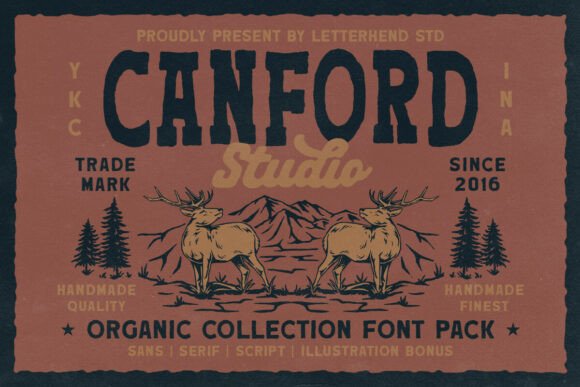
Canford Trio is a comprehensive font pack developed by Letterhend Std, specifically designed to cater to the aesthetic needs of modern designers working in niche markets such as outdoor branding, vintage packaging, and artisanal product design. The collection is composed of three core font styles—Sans, Serif, and Script—offering a cohesive yet diverse typographic toolkit. Its design language draws inspiration from natural elements, rustic signage, and handcrafted lettering, making it ideal for projects that require a strong organic presence.
Each font within the Canford Trio family is created with a focus on handmade quality and fine aesthetic details. The result is a typeface that feels authentic, rugged, and visually grounded. The inclusion of PUA encoding ensures that users can access all special characters and decorative elements without the need for additional software or complex workarounds, enhancing the font’s usability across different platforms and design applications.
Why Designers Consider Canford Trio
Designers and brand creators often seek typefaces that convey a specific mood or thematic consistency. Canford Trio appeals particularly to those who want to evoke a sense of authenticity, craftsmanship, and connection to nature. Its versatility across three distinct font styles allows for layered, multi-dimensional design work without sacrificing visual harmony.
- Outdoor and Adventure Branding: Whether it’s for apparel, gear, or travel-related media, Canford Trio offers a rugged aesthetic that resonates with outdoor enthusiasts.
- Vintage and Artisanal Packaging: Coffee packaging, craft brewery labels, and small-batch product branding benefit from the font’s handcrafted look and nostalgic appeal.
- Trademarked Goods and Logos: The distinctiveness of the font makes it suitable for trademarked branding where a unique visual identity is crucial.
Key Benefits of Using Canford Trio
One of the main strengths of Canford Trio lies in its ability to provide a unified yet stylistically rich typographic system. Designers can mix and match the Sans, Serif, and Script styles to create dynamic compositions that feel both intentional and organic. This flexibility supports a wide range of design applications, from print to digital media.
Additionally, the PUA encoding feature enhances accessibility and usability. Designers can easily incorporate special characters and stylistic alternates into their work without requiring advanced design software or extensive technical knowledge. This makes Canford Trio approachable for both seasoned professionals and independent creators.
Tradeoffs and Considerations
While Canford Trio excels in niche, design-forward applications, it may not be the best choice for projects that require a clean, modern, or highly legible typeface. The rustic and handcrafted nature of the font can sometimes compromise readability, especially in smaller sizes or in digital interfaces where clarity is essential.
Moreover, because of its strong stylistic identity, Canford Trio may not be as adaptable for projects that require a more neutral or minimalist tone. Users should also consider licensing terms and ensure that the font is suitable for commercial use in their specific application, especially if they plan to embed it in products or digital platforms.
When Canford Trio Is a Strong Fit
Canford Trio shines in design contexts where authenticity and visual storytelling are central. Projects that benefit from a tactile, handcrafted aesthetic—such as:
- Craft beer labels
- Outdoor apparel and gear branding
- Artisanal food packaging
- Rustic wedding invitations or event design
- Vintage-style logos and trademarks
In these cases, the font’s organic presence and stylistic depth can elevate the overall design and reinforce brand identity effectively.
When Alternatives May Be Worth Considering
For projects that require high legibility, minimalism, or broad stylistic neutrality, other typefaces may be more appropriate. Designers working on:
- User interfaces
- Technical documentation
- Corporate branding
- Large body text applications
may find that more conventional sans-serif or serif fonts offer better performance and adaptability. In such cases, alternatives like Roboto, Open Sans, or Georgia may provide the clarity and flexibility needed for effective communication.
Making an Informed Decision
Choosing a typeface is more than a visual decision—it's a strategic one that impacts brand perception, readability, and user experience. When considering Canford Trio, evaluate the following:
- Project Theme: Does the design need to convey a rugged, handcrafted, or vintage aesthetic?
- Usage Context: Will the font be used in print, digital, or product design? Consider how the font will perform across different mediums.
- Readability Requirements: If the font will be used for body text or small-sized elements, test it for legibility before committing.
- Licensing and Compatibility: Ensure that the font license allows for the intended use, and that PUA encoding works with your design tools.
If the answers align with the strengths of Canford Trio, it may be a valuable addition to your typographic toolkit. However, if your project demands neutrality, clarity, or broad adaptability, exploring alternative typefaces may be a more practical choice.
Conclusion
Canford Trio offers a compelling blend of rustic charm, stylistic versatility, and handmade authenticity. For designers working in niche markets that value organic aesthetics and storytelling, it provides a unique and expressive typographic solution. However, as with any design tool, its effectiveness depends on the specific context and goals of the project. By carefully evaluating the intended use, readability needs, and stylistic fit, designers can determine whether Canford Trio aligns with their creative vision and practical requirements.